

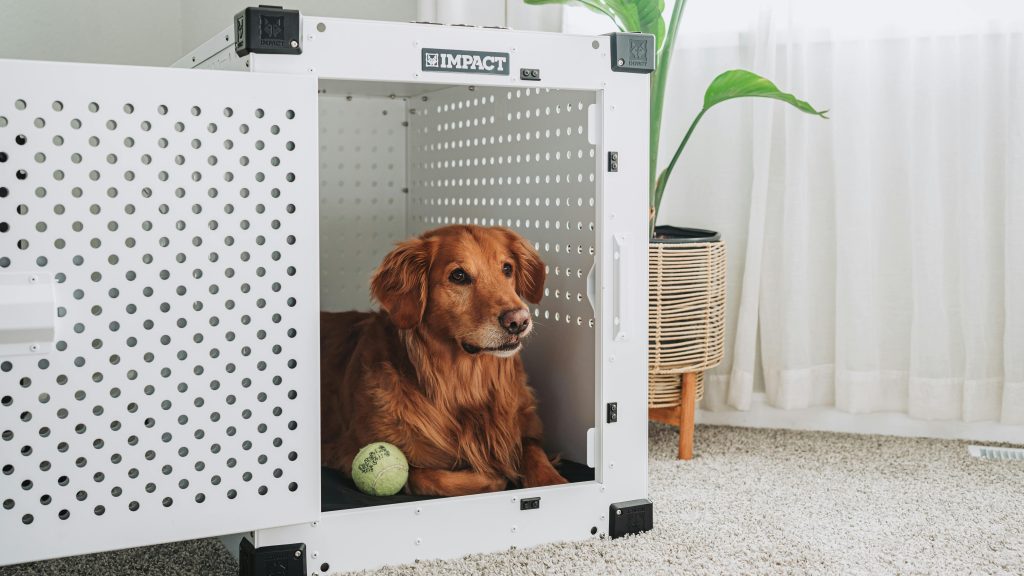
Crate training is a valuable tool that helps dogs feel secure while also providing owners with an effective way to manage their pet’s behavior. When introduced correctly, a crate becomes a comfortable and familiar space where dogs can relax, rest, and retreat when they need time alone. Many experts recommend crate training as a way to support house training, reduce anxiety, and establish a structured routine for your dog.
Beyond practical benefits, a crate offers a safe haven for dogs, mimicking the instinctive denning behavior of their wild ancestors. Whether you’re raising a puppy or adopting an adult dog, teaching them to associate their crate with positive experiences can improve their well-being and make daily life easier for both you and your pet. Keep reading to discover how to properly crate train your dog and why this method is beneficial for their long-term happiness.
Why Crate Training Is Important for Your Dog
Encourages a Sense of Security
In the wild, dogs seek out small, enclosed spaces for safety and comfort. A crate mimics this natural instinct, providing a calm retreat where your dog can feel protected and secure. Instead of associating it with confinement, a properly introduced crate becomes a personal space where your dog can relax without stress or disturbances.
A crate is especially useful in multi-pet households or homes with small children, as it gives the dog a place to retreat when they need quiet time. Dogs often feel overwhelmed by excessive activity, and having a designated safe zone helps them manage their environment better.
Aids in Housebreaking
One of the biggest benefits of crate training is its role in housebreaking. Dogs naturally avoid soiling their sleeping area, so when confined in a properly sized crate, they learn to hold their bladder until they are taken outside. This accelerates the potty training process by reinforcing a consistent routine.
To make housebreaking effective:
- Choose a crate size that allows your dog to stand, turn around, and lie down comfortably, but not large enough to create a bathroom corner.
- Take your dog outside immediately after leaving the crate to reinforce good habits.
- Use consistent feeding and bathroom schedules to teach bladder control.
- Avoid leaving your dog crated for long hours, as this can lead to accidents and discomfort.
Prevents Destructive Behavior
Many dogs suffer from boredom, anxiety, or teething issues, leading to destructive behaviors like chewing furniture, tearing carpets, or scratching doors. A crate helps manage this behavior by giving them a safe space to rest when unsupervised.
Crating is particularly helpful for puppies, who tend to explore their surroundings with chewing and biting. By limiting access to potentially hazardous household items, a crate keeps your dog safe while preventing damage to your belongings.
Reduces Separation Anxiety
Dogs that experience separation anxiety can benefit greatly from crate training. A crate provides a familiar and calming space, reducing stress when left alone. It helps prevent excessive barking, whining, or destructive behaviors, which are common signs of anxiety.
To help dogs with separation anxiety:
- Introduce the crate as a positive space, never as a punishment.
- Use soft bedding, favorite toys, or calming scents to create a soothing environment.
- Start with short crate sessions while you’re home, then gradually extend the time.
- Avoid making departures and arrivals overly emotional to prevent stress buildup.
Makes Traveling and Vet Visits Easier
A crate-trained dog is much more comfortable during travel and vet visits. Whether you’re going on a road trip, flying, or visiting the veterinarian, a crate provides a familiar environment that reduces stress and nervousness.
For safe and comfortable travel:
- Choose a well-ventilated crate that meets airline or car safety standards.
- Familiarize your dog with the crate before traveling to make the experience smoother.
- Use comfortable bedding and secure water dispensers to keep your dog at ease.
How to Crate Train Your Dog Step by Step
Choosing the Right Crate
Selecting the correct crate is essential for successful training. There are several types of crates available:
- Plastic crates – Durable and great for travel but may feel too enclosed for some dogs.
- Wire crates – Well-ventilated and collapsible, making them ideal for home use.
- Soft-sided crates – Lightweight and portable, best for small, well-trained dogs.
- Heavy-duty crates – Designed for strong or escape-prone dogs that need extra security.
The size of the crate is crucial. It should be:
- Big enough for your dog to stand, lie down, and turn comfortably.
- Not too large, or your dog may use one corner as a bathroom.
For puppies, consider using a crate with adjustable dividers, allowing you to expand the space as they grow.
Introducing the Crate Positively
A crate should be introduced as a positive and rewarding space, not a punishment. To help your dog adjust:
- Place the crate in a quiet but active area, where your dog can observe family activities.
- Keep the door open and allow them to explore freely.
- Use treats, toys, and praise to encourage them to enter voluntarily.
- Feed meals near or inside the crate to create positive associations.
Patience is key—some dogs take longer than others to feel comfortable inside a crate.
Gradually Increasing Crate Time
Once your dog is comfortable entering the crate, gradually increase the time spent inside:
- Start with short sessions (5-10 minutes) while you are nearby.
- Close the door for brief periods, rewarding calm behavior.
- Extend crate time gradually while staying in the room.
- Leave the room for short periods to build independence.
- Increase the time gradually until your dog can stay relaxed for longer durations.
If your dog whines or barks, avoid letting them out immediately. Wait until they are calm to prevent reinforcing negative behavior.
Using the Crate for Sleeping
Many owners prefer crating their dogs at night to establish a consistent bedtime routine. Ensure the crate is:
- Placed in a quiet, cozy location to minimize disturbances.
- Equipped with soft bedding and familiar scents to promote relaxation.
- Not used for punishment, as this creates negative associations.
Puppies may need midnight potty breaks, so be patient and adjust accordingly.
Common Crate Training Mistakes and How to Avoid Them
Using the Crate as Punishment
A crate should always be a safe and positive space. If used as a punishment, your dog will associate it with fear and stress, making training much harder. Instead, reward them for calm behavior inside the crate.
Leaving Your Dog Crated for Too Long
Dogs need social interaction, exercise, and playtime. Leaving them crated for extended periods can lead to:
- Frustration and boredom
- Muscle stiffness from lack of movement
- Increased anxiety and depression
General crate time recommendations:
- Puppies under 6 months: No more than 3-4 hours at a time
- Adult dogs: Maximum of 6-8 hours, depending on activity level
- Senior dogs: Adjust based on comfort and health conditions
Skipping Exercise Before Crate Time
A well-exercised dog is more likely to settle in the crate calmly. Always provide:
- A walk or play session before crating to release excess energy.
- Interactive toys or chew treats to keep them occupied.
Not Following a Consistent Routine
Dogs thrive on predictability and structure. Inconsistent crate training leads to confusion and anxiety. Keep a fixed schedule for:
- Feeding and bathroom breaks
- Crate time and free time
- Sleeping and waking hours
Giving In to Whining Too Quickly
Many dogs will whine when first introduced to a crate. If you immediately let them out, they learn that whining gets results. Instead:
- Ignore whining until they calm down.
- Reinforce positive behavior with treats and praise.
- Check if they need a bathroom break if whining is excessive.
By avoiding these common mistakes and following a structured plan, crate training can be an invaluable tool for housebreaking, behavioral management, and overall well-being.
In conclusion, crate training is an essential tool for raising a well-behaved, confident, and stress-free dog. When introduced correctly, a crate becomes a safe space, helping with housebreaking, reducing destructive behavior, and easing separation anxiety. It is not a form of punishment but a way to provide comfort and structure, ensuring your dog feels secure and at ease. Choosing the right crate size, using positive reinforcement, and maintaining a consistent routine are key to successful training. Whether you’re training a puppy or an adult dog, patience and gradual introduction are essential. By following the right steps and avoiding common mistakes, crate training can be a positive and beneficial experience for both you and your dog, leading to a happier, calmer, and more well-adjusted pet.